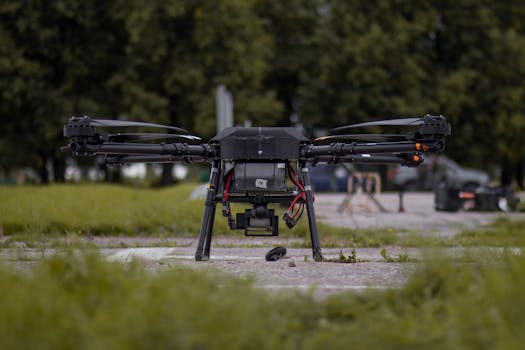
Think back just a decade or two. The idea of carrying a device in your pocket that could access almost all of human knowledge, connect you instantly with someone across the globe, or even diagnose a potential health issue might have sounded like pure science fiction. Yet, here we are. This isn’t just a collection of cool gadgets; it’s the tangible impact of tech-driven innovations, a force that’s not merely changing how we do things, but fundamentally altering what is possible.
This constant evolution, powered by relentless technological advancement, touches every facet of our lives. From the way we work and learn to how we socialize and manage our health, innovation is the engine of progress. But what exactly fuels this relentless march forward? And what does it mean for us, both as individuals and as a society? Let’s dive in.
The Core Engine: What Fuels Tech-Driven Innovations?
At its heart, tech-driven innovation is about solving problems and creating new opportunities through the application of technology. It’s a cyclical process, where one breakthrough often paves the way for several more. Several key drivers are constantly at play:
Advancements in Computing Power: Moore’s Law, the observation that the number of transistors on a microchip doubles approximately every two years, has been a cornerstone. This exponential growth in processing power allows for more complex algorithms, sophisticated simulations, and the handling of massive datasets.
Ubiquitous Connectivity: The internet, mobile networks, and the proliferation of connected devices (the Internet of Things, or IoT) mean data can be generated, shared, and analyzed in real-time, from virtually anywhere. This creates a feedback loop that informs further development.
Big Data and Analytics: We’re generating more data than ever before. The ability to collect, store, and analyze this “big data” allows us to identify patterns, predict trends, and personalize experiences in ways previously unimaginable.
Artificial Intelligence (AI) and Machine Learning (ML): AI and ML are perhaps the most transformative forces right now. They enable systems to learn, adapt, and perform tasks that traditionally required human intelligence, from image recognition to natural language processing.
New Material Science and Manufacturing: Innovations in materials, like advanced composites and nanotechnology, alongside breakthroughs in manufacturing processes like 3D printing, enable the creation of novel products and more efficient production methods.
From Concepts to Reality: How Innovation Takes Shape
It’s easy to talk about innovation in broad strokes, but how does it actually manifest? It’s rarely a single “aha!” moment; rather, it’s a journey through several stages.
#### The Spark of an Idea
Every significant innovation begins with a problem that needs solving, a desire for improvement, or a vision for a better future. This could be anything from a scientist pondering a biological puzzle to an entrepreneur identifying a market gap.
#### Research and Development (R&D)
This is where the theoretical meets the practical. Dedicated teams, often within corporations, universities, or startups, pour resources into exploring new technologies, experimenting with designs, and testing hypotheses. This phase can be lengthy and fraught with challenges, but it’s crucial for laying the groundwork.
#### Prototyping and Iteration
Once a promising concept emerges, prototypes are built. These are early versions of the product or service, designed to test functionality, user experience, and feasibility. Iteration is key here; prototypes are refined, tested again, and improved based on feedback and performance data. I’ve often found that the most successful innovations come from relentless refinement.
#### Scaling and Deployment
If a prototype proves successful, the next hurdle is scaling production and deploying the innovation to the market. This involves manufacturing, marketing, distribution, and ensuring the technology is accessible and reliable for its intended users.
Disruptive Forces: Tech-Driven Innovations Changing Industries
The impact of tech-driven innovations is most evident in how they disrupt established industries and create entirely new ones.
Healthcare: From AI-powered diagnostics and robotic surgery to personalized medicine and telehealth, technology is revolutionizing patient care, research, and accessibility. Think about wearable devices that monitor vital signs in real-time, providing early warnings of potential health issues.
Finance: Fintech, or financial technology, has transformed banking, payments, and investment. Blockchain, cryptocurrencies, and AI-driven financial advisors are just a few examples of innovations reshaping how we manage money.
Transportation: Electric vehicles, autonomous driving systems, and ride-sharing platforms are fundamentally altering mobility. Innovations in battery technology and sensor arrays are making these once-futuristic concepts a daily reality.
Education: Online learning platforms, personalized learning software, and virtual reality (VR) for immersive educational experiences are democratizing access to knowledge and tailoring learning to individual needs.
Manufacturing and Logistics: Automation, robotics, and AI are optimizing supply chains, improving factory efficiency, and enabling on-demand production. This leads to faster delivery times and more customized products.
Navigating the Future: Challenges and Opportunities
While the prospects are exciting, tech-driven innovations also present challenges we must thoughtfully address.
#### Ethical Considerations
As technology becomes more powerful, ethical questions surrounding data privacy, algorithmic bias, job displacement, and the responsible use of AI become paramount. We need robust frameworks and ongoing public discourse to ensure technology serves humanity equitably.
#### Digital Divide
Ensuring that the benefits of innovation are accessible to everyone, regardless of socioeconomic status or geographic location, is a critical challenge. Bridging the digital divide is essential for inclusive progress.
#### Continuous Learning and Adaptability
The pace of change means that individuals and organizations must commit to continuous learning and adaptability. Skills that are valuable today may be obsolete tomorrow, so fostering a culture of lifelong learning is more important than ever.
Embracing the Next Wave
The journey of tech-driven innovations is far from over. We’re on the cusp of even more profound transformations driven by advancements in quantum computing, biotechnology, renewable energy, and the metaverse. The key to navigating this dynamic landscape lies in our ability to not only adopt new technologies but to do so with a critical, informed, and human-centric perspective.
Wrapping Up: Your Role in the Innovation Ecosystem
The most powerful takeaway is that tech-driven innovations aren’t happening to us; they are being built by us and for us. My advice? Stay curious. Engage with new technologies, understand their potential and their pitfalls, and advocate for their responsible and equitable development. Your active participation is what will truly shape the future.
Leave a Reply